

- June 16, 2026
- soft-gensparc
- 0 Comments
- Uncategorized
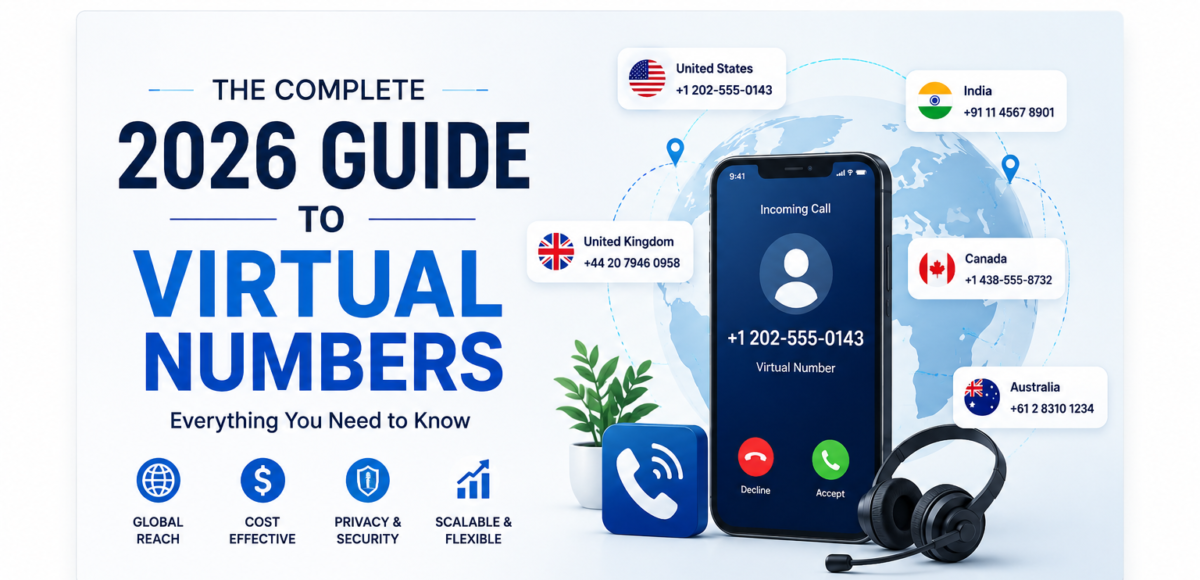
The Complete 2026 Guide to Virtual Numbers
Every unanswered call is a customer who just called your competitor instead. As more Indian
businesses move off personal mobile numbers and onto proper communication systems, three
terms keep coming up in searches: virtual mobile number, IVR, and auto dialer. They sound
similar, get used interchangeably, and that confusion ends up costing businesses leads.
This guide answers the questions real business owners are typing into Google in 2026 — what
each tool actually does, what it costs in India, and which one (or combination) fits a business
your size. No jargon, just straight answers.
Quick Answer: What's the Difference?
| Tool | What it does |
|---|---|
| Virtual Mobile Number | Replaces your personal number with one professional, trackable business number |
| IVR (Interactive Voice Response) | Greets and routes every incoming call automatically, 24/7 — no missed calls |
| Auto Dialer | Automatically calls your outbound leads so your team never dials manually |
Most growing businesses end up using all three together as one connected system: a virtual
number that customers call, an IVR that answers and routes it, and an auto dialer that follows
up on every lead that comes in. That’s exactly how Gensparc’s Simple IVR, Dialer-D, and Lead
Generation tools are built to work — separately or as one stack.
Virtual Mobile Numbers for Business
What is a virtual mobile number, and how is it different from my personal number?
A virtual mobile number is a business phone number that isn’t tied to a single SIM card or
device. Calls to it can be routed to one phone, several phones, or a whole team — and
reassigned anytime without changing the number customers already know. Your personal
number, by contrast, is fixed to one device, has no call routing, and shares your private digits
with strangers the moment you list it on a website or ad.
Why do small businesses need a dedicated business number instead of using a personal mobile?
Three reasons come up again and again: privacy (your team’s personal numbers stay private),
continuity (the number survives if a sales rep leaves the company), and professionalism (a
consistent business number builds more trust than a string of personal numbers across your
ads, website, and signage). It also lets you measure which marketing channel a call actually
came from — something a personal number can never tell you.
Can a virtual number capture leads coming from Facebook, Instagram, and Google Ads?
Yes, and this is where most businesses leave money on the table. Each ad platform or landing
page can be assigned its own trackable number (or tracked via a single number with call
tagging), so every inbound call is automatically logged against the campaign that generated it.
Combined with an auto-dialer like Dialer-D, the same setup can also auto-dial leads who fill out
a form on Facebook, Instagram, or X instead of waiting for them to call you.
What types of virtual numbers are available in India?
The three common types are: local numbers (carry a city code, useful for building a local
presence in a specific market), toll-free numbers (typically starting with 1800, free for the caller
— good for national brands), and mobile virtual numbers (a standard 10-digit number that
behaves like any mobile number but with business features like routing and call logs layered on
top). Most small and mid-sized businesses start with a mobile virtual number and add a toll-free
line later if they expand pan-India.
IVR (Interactive Voice Response) Systems
What is an IVR system, and how does it actually work?
IVR is the automated voice menu that greets a caller and lets them choose where to go —
“Press 1 for Sales, Press 2 for Support” — using keypad taps or, increasingly, spoken
responses. Behind the scenes, it routes the call to the right person or department, plays a
professional greeting when no one’s available, and logs every call so nothing falls through the
cracks.
Is IVR only for big companies, or can small businesses use it too?
This is one of the biggest misconceptions about IVR. Modern cloud-based IVR is built
specifically for small teams — a two-person consultancy or a five-person real estate office can
set up a simple menu in a day, with no hardware, no PBX box in the office, and no IT team
required. The “enterprise phone system” image is outdated; cloud IVR scales down just as
easily as it scales up.
What are the real, measurable benefits of adding IVR to a business number?
The most common gains businesses report are fewer missed calls (every call gets a response
even outside office hours), faster routing (customers reach the right person on the first try
instead of being transferred manually), a more professional brand impression from the first ring,
and complete call logs that make it obvious which leads were followed up and which weren’t —
something that’s nearly impossible to track on a personal phone.
How long does it take to set up an IVR system, and is it complicated?
For a straightforward menu — a greeting plus two or three routing options — most providers can
have a small business live within a day or two. The process is usually: choose your number,
record or generate your greeting, map out where each option should route, and test it with a few
real calls. No technical background is needed on the business owner’s end; the provider
configures the backend.
Industry-Specific Questions
Does a real estate business really need a virtual number and IVR?
Real estate is one of the clearest cases for this. A single missed call from a paid Google or
Facebook ad can mean a lost site visit and a wasted ad rupee — and real estate buyers rarely
call back if they don’t get through the first time. We’ve covered this in detail, including a real
scenario, in our dedicated post on virtual numbers for real estate businesses, and the Galaxy
Propmart case study shows what this looked like in practice for one of our clients.
Is IVR useful for clinics, hospitals, and other healthcare providers?
Very much so. Patients calling to book appointments, ask about reports, or check timings expect
a quick, professional response — and a missed call from a patient often just means they call a
different clinic next. IVR lets a small clinic route calls to reception, billing, or a specific doctor’s
desk without hiring extra front-desk staff just to manage the phone.
What's the right setup for a startup, agency, or call centre on a tight budget?
Start with a virtual number plus a simple two- or three-option IVR menu — this alone fixes the
majority of missed-call and unprofessional-image problems for very little spend. Add an auto
dialer once you have a steady, repeatable flow of inbound leads worth following up at scale.
Trying to buy a full enterprise contact-centre suite before you have the lead volume to justify it is
the most common budget mistake we see — it’s better to scale the system as your call volume
actually grows.
Cost & Getting Started
How much do virtual numbers, IVR, and auto dialers cost in India in 2026?
Pricing depends heavily on call volume, number of users, and which features you need (CRM
integration, call recording, toll-free vs. local number), so treat any number here as a starting
reference, not a quote. Across the Indian market, a basic virtual number plan typically starts in
the low hundreds of rupees per month, a small business IVR setup with a few routing options is
commonly priced in the low thousands per month, and high-volume enterprise IVR with
dedicated support and unlimited channels can run from roughly ₹15,000 up to ₹50,000+ per
month. The fastest way to get an accurate number for your specific call volume is a quick
conversation with our team.
What should a business look for when choosing a provider?
A short checklist worth running through: uptime and call reliability (ask about their guaranteed
uptime), CRM integration (so calls and leads land in one system, not scattered across
notebooks), scalability (can you add lines as you grow, without re-platforming), genuine local
support (a provider that understands Indian telecom rules and answers support calls quickly),
and transparent pricing (no surprise per-minute charges buried in the fine print).
How quickly can this be set up, and how does Gensparc help?
For most small and mid-sized businesses, a virtual number with a basic IVR menu can be live
within a couple of days, with auto-dialer and CRM integration added on top once the core setup
is working. Gensparc handles the configuration end-to-end — choosing the right number type,
building the IVR flow, connecting Dialer-D for outbound automation, and testing everything with
real calls before handover, so there’s no technical lift required on your side.
Ready to Stop Losing Leads to Missed Calls?
Gensparc Technologies has been building telecom and lead-automation systems for Indian
businesses since 2013 — from real estate offices in Greater Noida to enterprise helpdesks. If
you’re still deciding between a virtual number, IVR, or a full Dialer-D + lead automation setup,
talk to our team and we’ll recommend the right starting point for your call volume and budget.
+91 92666 63731 · ✉connect@gensparc.com · Get in touch →
Leave a Comment